Redesigning a Sales Driven E-commerce Experience for Motodrift
Moto Drift (Freelance)
2025
Overview
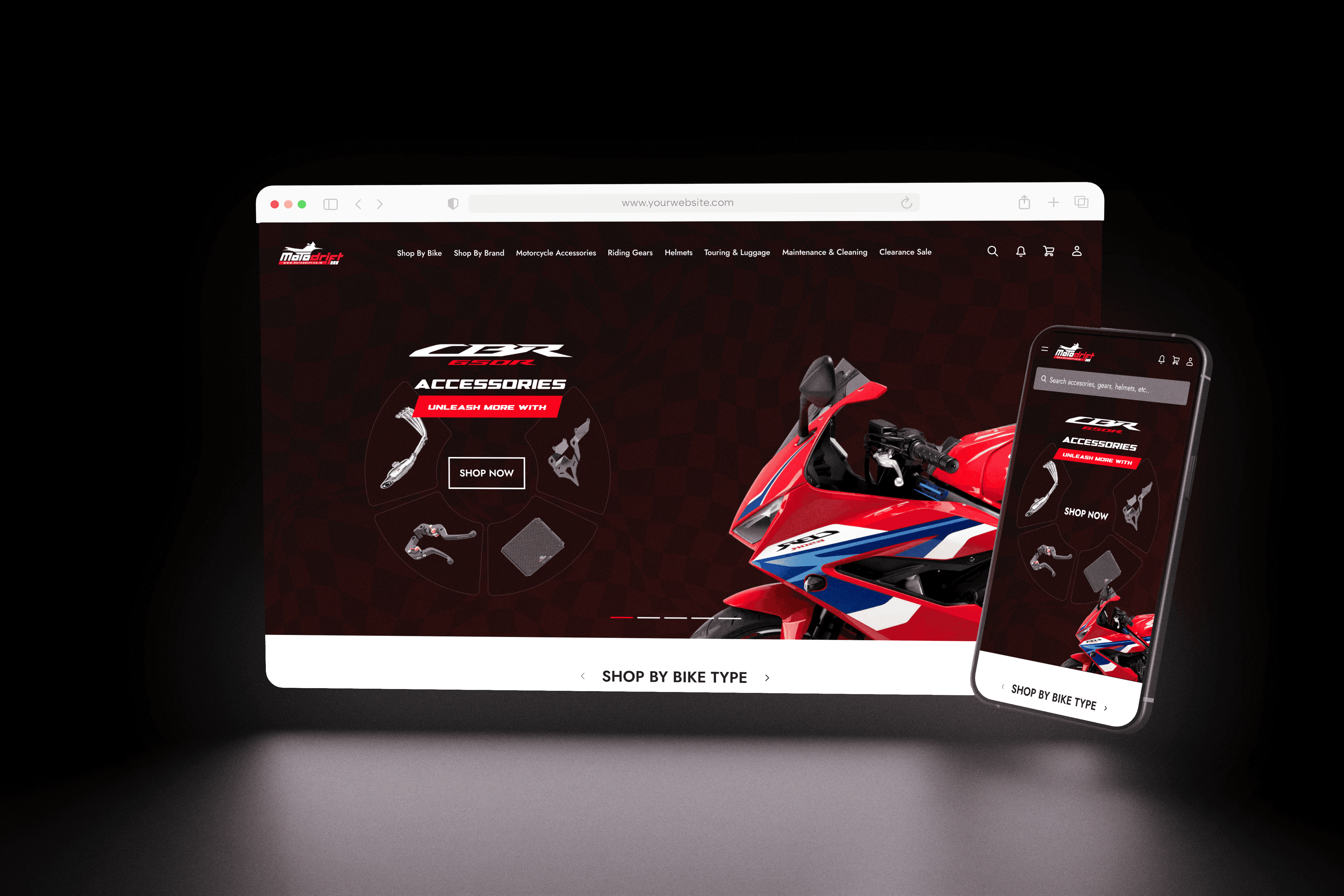
Redesigned the Motodrift website to create a modern, sales-focused experience that highlights key products, services, and value propositions. The new design improves product visibility, simplifies navigation, and supports faster decision-making for customers browsing motorbike accessories and spare parts.
Role
UI UX Designer
Team
Designer, Developer
Timeline
2 Weeks
The Problem
The existing website lacked a modern visual identity and did not effectively support product discovery or sales. Key products and services were not prominently highlighted, making it difficult for users to quickly understand offerings or make purchase decisions. Navigation was not optimized for browsing a wide range of accessories and spare parts, resulting in a fragmented experience and reduced engagement.
The Opportunity
Redesign the website to create a modern, product-first experience that improves visibility, simplifies navigation, and drives sales.
Discovery
Basic Research
Reviewed how users browse and purchase motorbike accessories online, focusing on product discovery patterns, category navigation, and decision-making behavior.
Users typically look for:
Quick access to categories
Clear product visuals
Easy comparison and selection
Insight:
E-commerce success depends on how quickly users can find relevant products and understand value.

Competitor Analysis
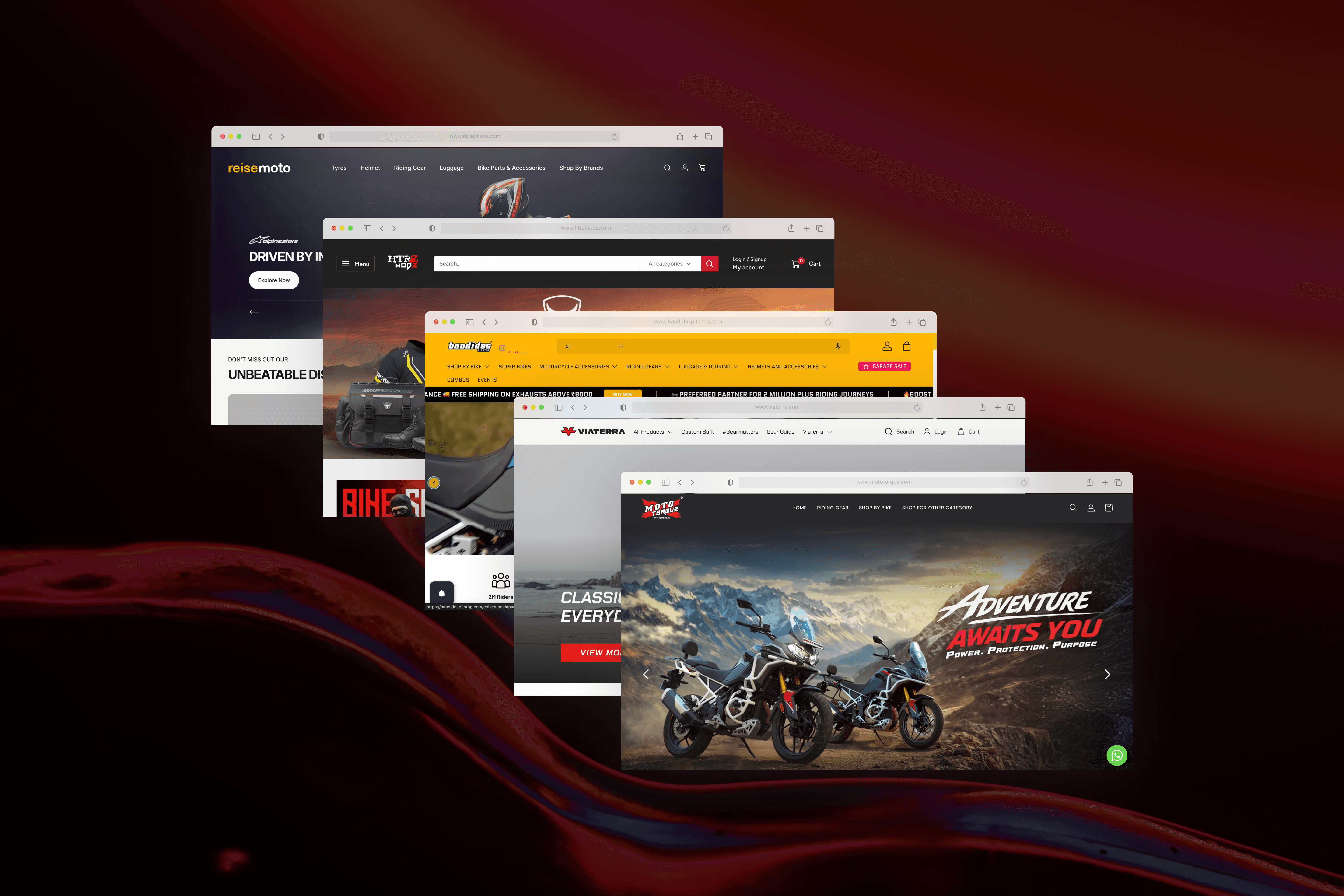
Analyzed leading e-commerce and motorbike accessory platforms to understand how products, categories, and offers are presented.
Most platforms:
Prioritize product visibility
Use strong visuals and banners
Highlight offers and best-sellers
Provide structured category navigation
Opportunity:
Create a clean, modern interface that balances product visibility, usability, and brand identity, while emphasizing high-value and high-selling items.
Information Architecture
The structure was redesigned to support faster navigation and better product discovery.
What Got Shipped
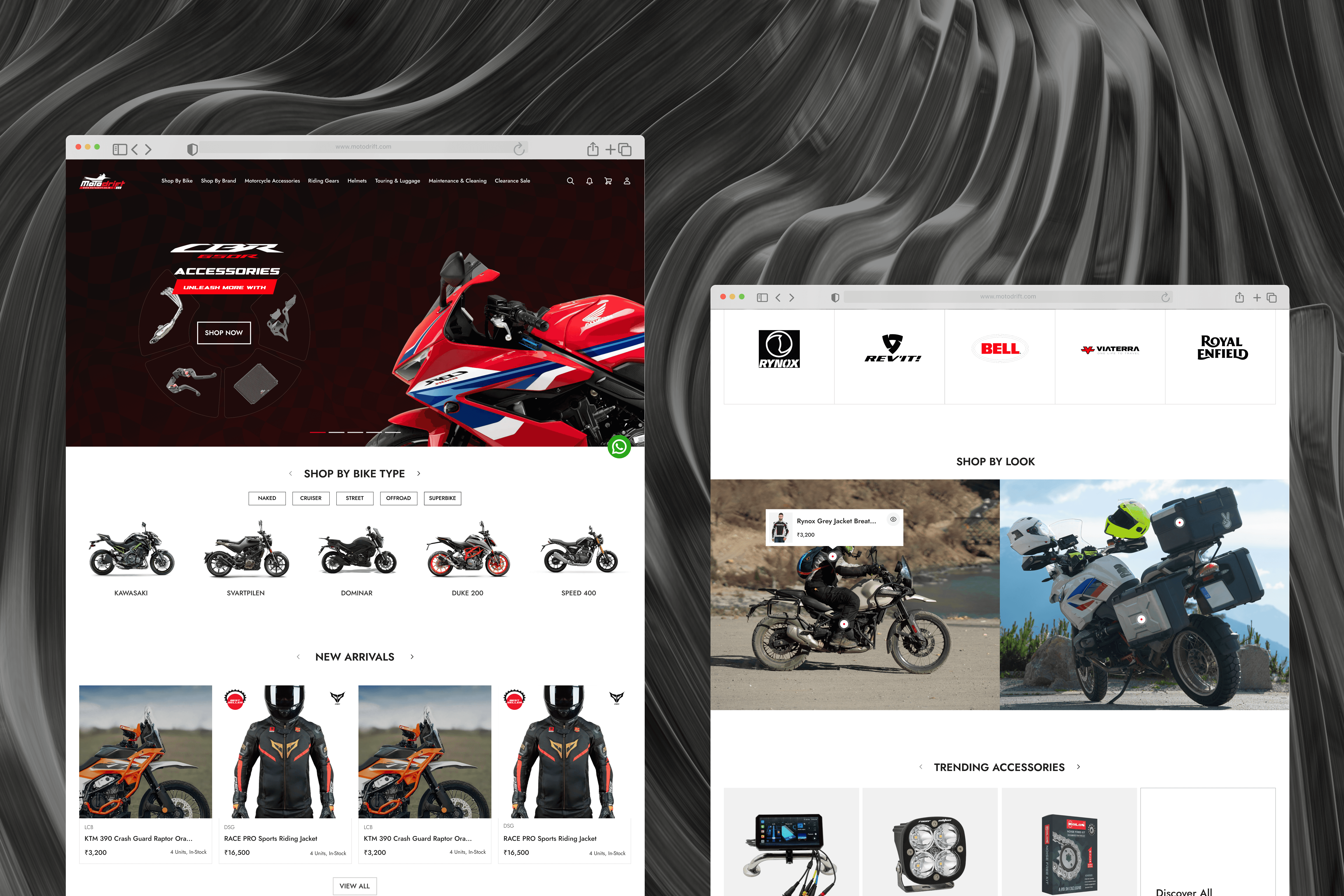
Discovery & Navigation: Making Products Easy to Find
The experience was structured to improve how users discover products across the platform. A category-driven navigation system was introduced, along with clearly defined collection pages that group products based on type, usage, and compatibility.
To further enhance discovery, a “Shop by Look” feature allows users to explore curated setups based on bike styles, enabling a more visual and intuitive browsing experience. This reduces the effort required to find relevant products and supports multiple entry points into the catalog.
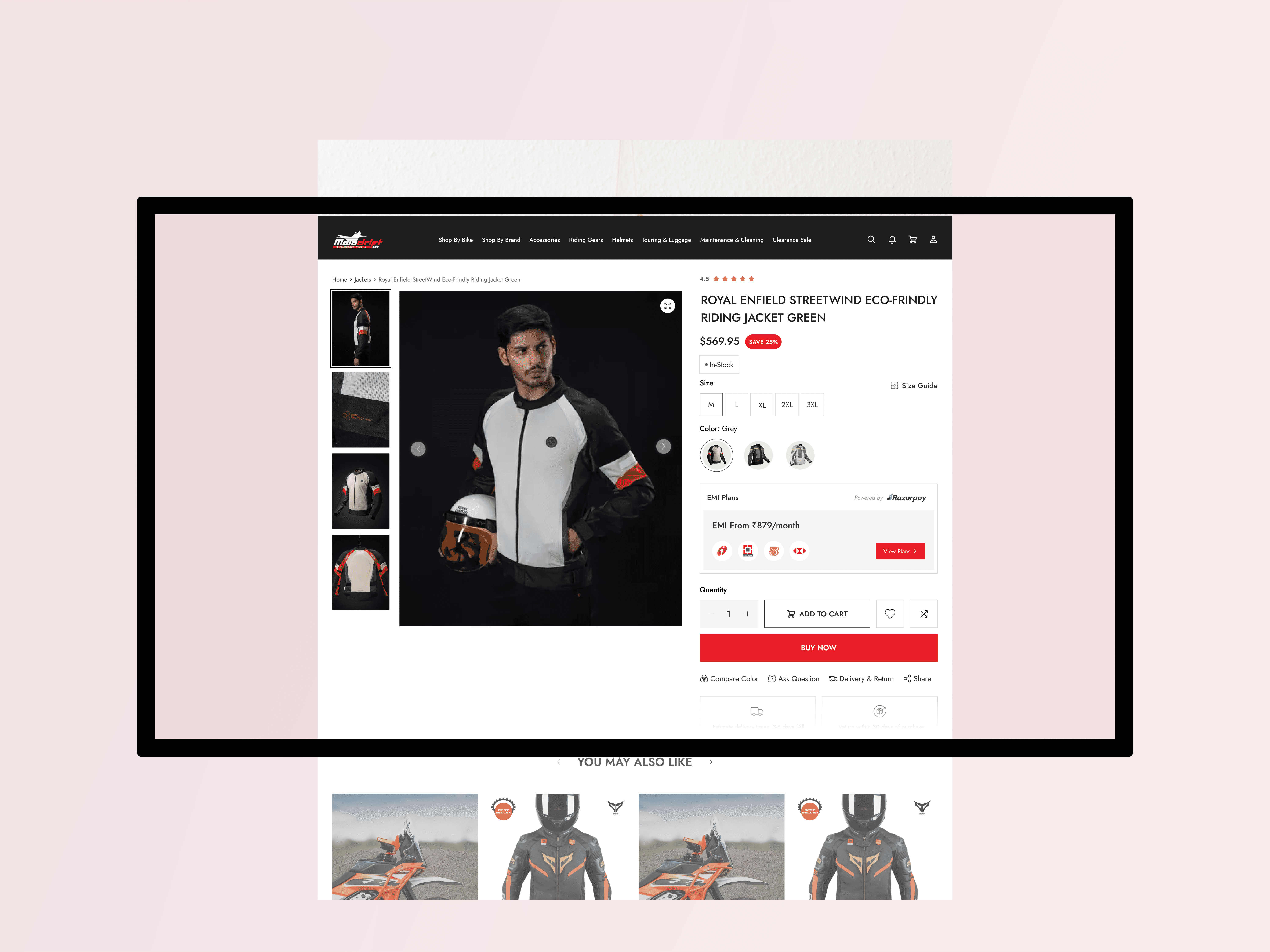
Product Experience: Driving Informed Decisions
The product page was redesigned to provide a more informative and engaging experience. Each product includes detailed information, high-quality visuals, and video content to demonstrate usage, installation, and real-world performance.
This helps users better understand the value of the product, reduces uncertainty, and supports faster decision making. The layout ensures key details such as specifications, compatibility, and pricing are easily accessible.
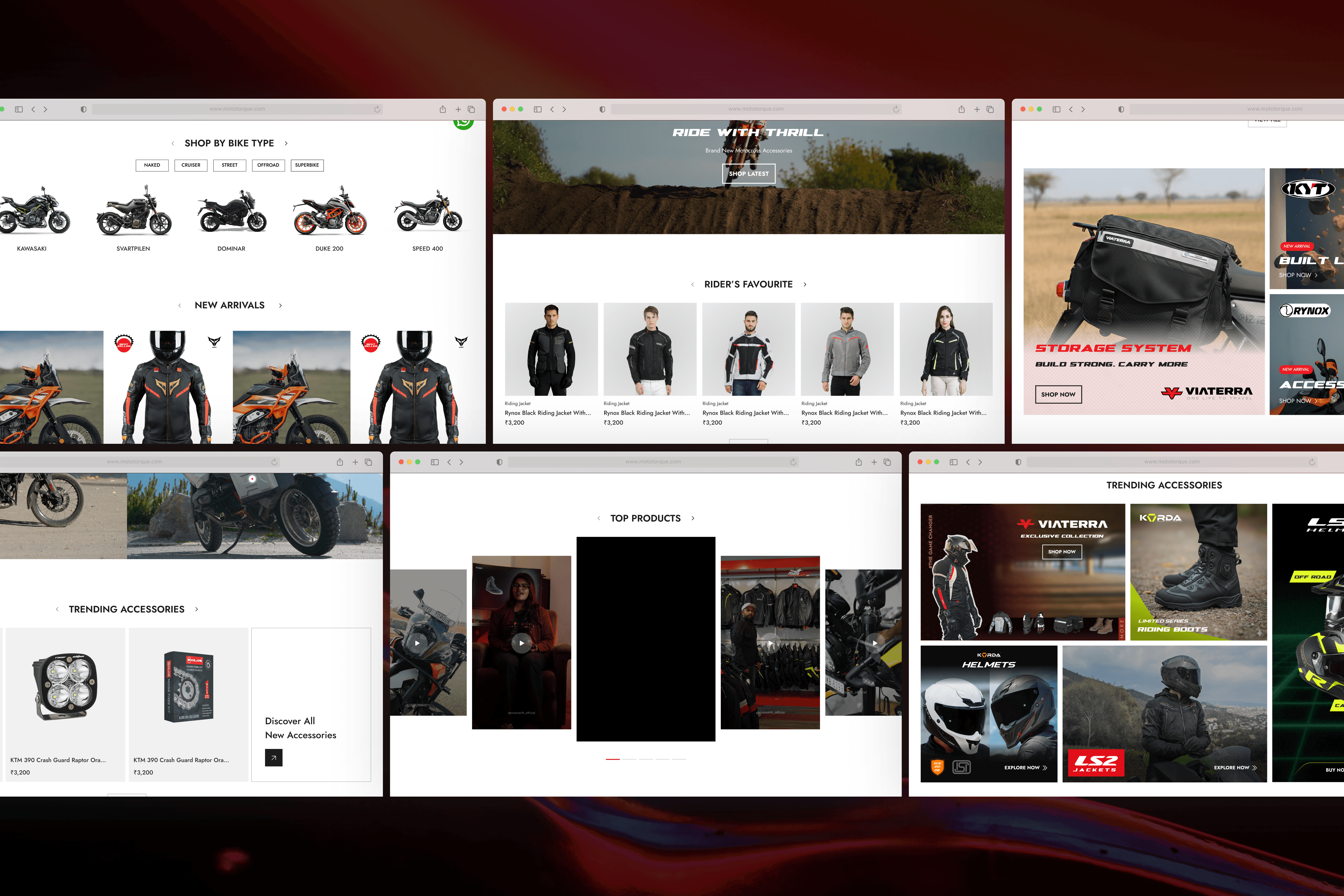
Sales & Conversion: Highlighting Value and Intent
The homepage and key sections were designed to prioritize best selling and high value products, guiding users toward popular and trusted options.
Dedicated sections for featured products, trending items, and promotional highlights were introduced to reduce decision friction and improve conversion. Clear call-to-actions and structured layouts ensure users can quickly move from discovery to purchase.
Brand & Community: Building Trust Beyond Products
Beyond product listings, the platform highlights Motodrift’s presence in the motorbike community through social activities, events, collaborations, and team ups.
This adds a layer of authenticity and builds trust by showcasing real-world engagement. Combined with a modern visual design system, this positions the brand as both a reliable retailer and an active part of the riding community.

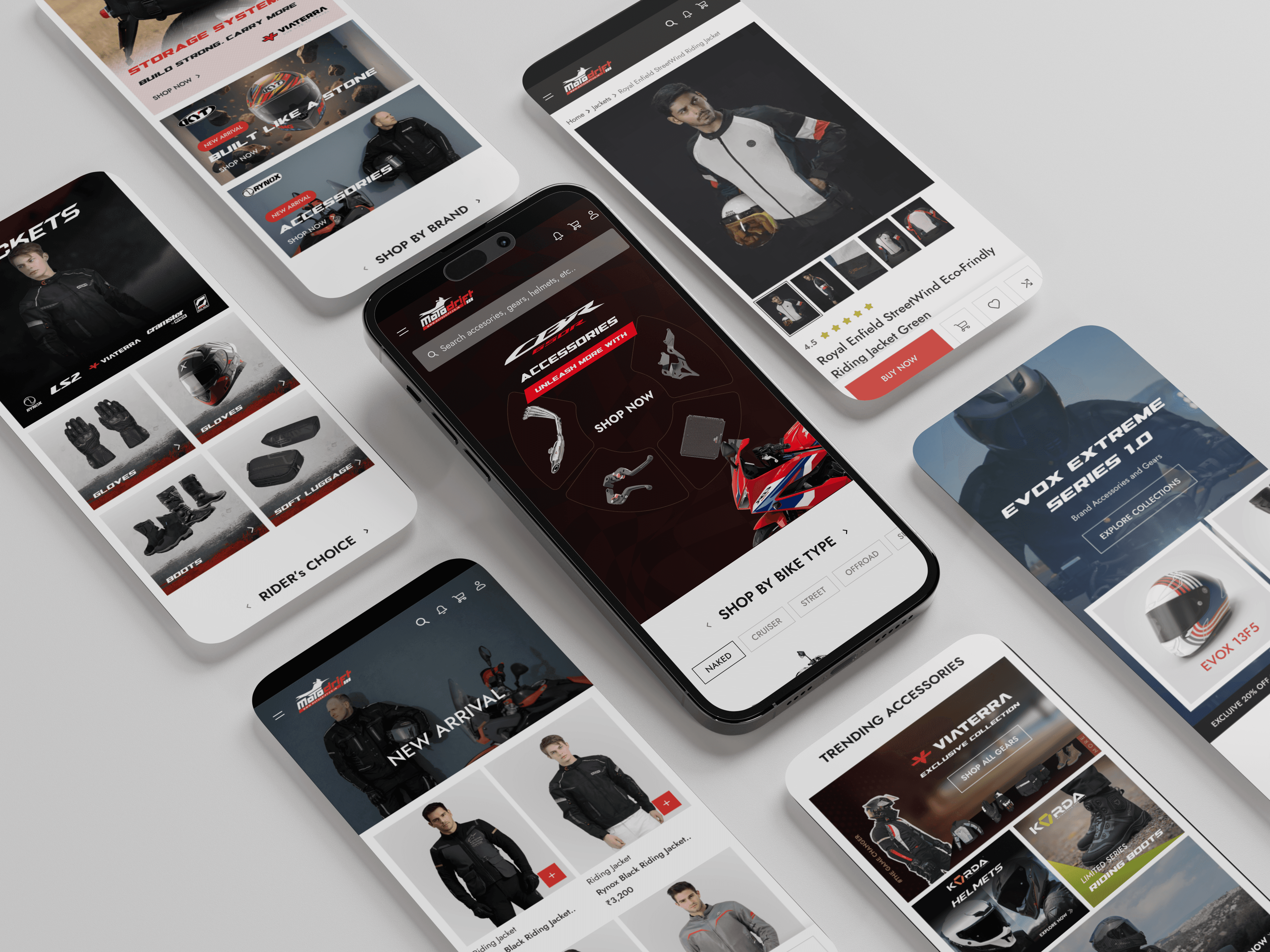
Mobile First Experience
The design ensures seamless browsing across devices, prioritizing mobile usability where users frequently explore products and content.

 Resume